
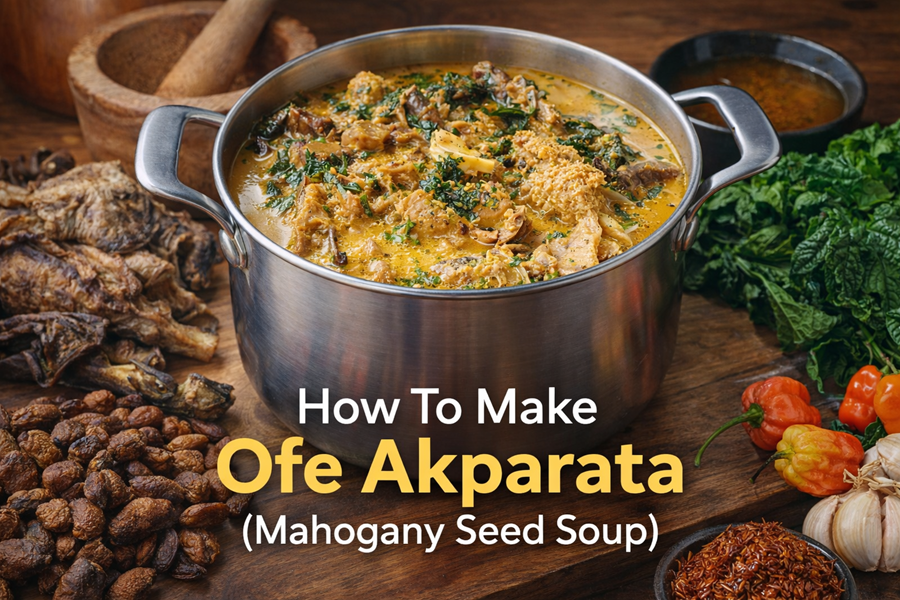

Learn how to make Ofe Akparata (Mahogany Seed Soup), a comforting and powerful Igbo traditional soup made with fermented mahogany seeds, local spices, and protein. A nourishing Nigerian classic you’ll love.
🥄 Introduction 🍲
Ofe Akparata is one of the most treasured yet lesser-known traditional soups from the Igbo region of Nigeria. This deeply aromatic dish, also known as Mahogany Seed Soup, is celebrated for its bold flavour, medicinal value, and cultural importance. Prepared with fermented mahogany seeds, palm oil, and local spices, Ofe Akparata delivers a rich, earthy taste that sets it apart from other Nigerian soups.
Traditionally cooked in eastern Nigeria, Mahogany Seed Soup is more than just food—it is heritage in a pot. It is often served during special occasions, family gatherings, and traditional ceremonies. For many Igbo households, learning how to prepare this Nigerian traditional soup correctly is a culinary rite of passage.
In this detailed guide, you’ll learn how to make Mahogany Seed Soup step by step, using authentic ingredients and proven techniques to achieve the perfect balance of flavour, aroma, and texture.
Table of Contents
❤️ Why You’ll Love This Recipe 🌿
You’ll fall in love with Ofe Akparata for many reasons:
- It has a deep, unique umami flavour from fermented mahogany seeds
- It is nutrient-dense and naturally medicinal
- It uses simple, locally sourced ingredients
- It pairs beautifully with swallows like fufu, garri, and pounded yam
- It preserves and celebrates Igbo culinary heritage
- It is filling, comforting, and satisfying
If you enjoy traditional soups with bold character, Mahogany Seed Soup will quickly become a favourite.
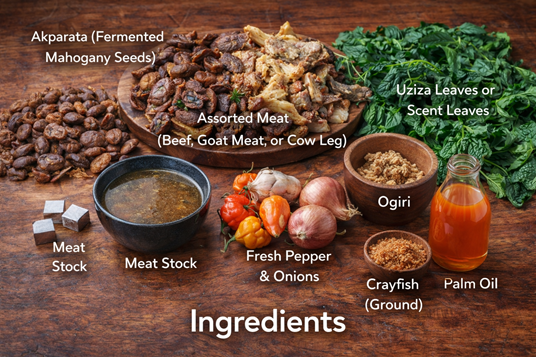
🧺 Ingredients Needed 🥬
Below are the essential ingredients required to prepare authentic Mahogany Seed Soup
- Akparata (Fermented Mahogany Seeds):
The star ingredient. It provides the soup’s signature aroma and flavour. - Palm Oil:
Adds richness, colour, and authentic Nigerian taste. - Assorted Meat (Beef, Goat Meat, or Cow Leg):
Adds depth and protein to the soup. - Stockfish and Dry Fish:
Enhances the umami and traditional flavour profile. - Crayfish (Ground):
Boosts aroma and adds a seafood undertone. - Uziza Leaves or Scent Leaves:
Provides freshness and peppery herbal notes. - Fresh Pepper (Scotch Bonnet):
Adds controlled heat and brightness. - Onions:
Builds the flavour base. - Ogiri (Optional):
Enhances traditional aroma. - Salt and Seasoning Cubes:
Balances and rounds off flavours. - Water or Meat Stock:
Used to control soup consistency.
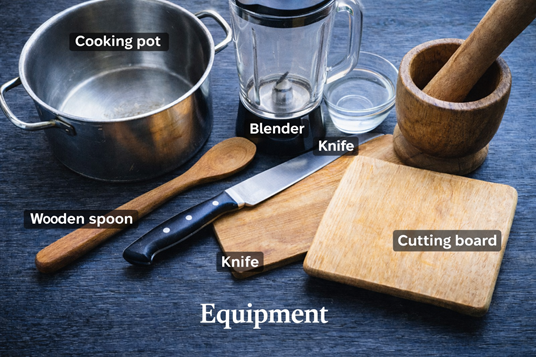
🍳 Equipment Needed 🔪
To cook the soup efficiently, you’ll need:
- Cooking pot (preferably heavy-bottomed)
- Wooden spoon
- Mortar and pestle or blender
- Sharp kitchen knife
- Chopping board
👩🏽🍳 Step-By-Step Guide: How To Make Ofe Akparata 🥘
🔹 Step 1: Prepare The Proteins
- Wash assorted meat thoroughly
- Season with salt, onions, and seasoning cubes
- Boil until tender and reserve the stock
🔹 Step 2: Clean And Soak The Fish
- Soak the stockfish until soft
- Clean dry fish and remove bones
🔹 Step 3: Process The Akparata
- Rinse fermented mahogany seeds
- Grind into a coarse paste using a mortar or a blender
🔹 Step 4: Start The Soup Base
- Heat palm oil gently in a pot
- Add chopped onions and stir briefly
🔹 Step 5: Add Akparata Paste
- Add ground akparata to the oil
- Stir continuously to prevent burning
🔹 Step 6: Build The Soup
- Add cooked meat, stockfish, and dry fish
- Pour in the meat stock gradually
🔹 Step 7: Season And Simmer
- Add crayfish, pepper, ogiri, seasoning cubes, and salt
- Simmer on low heat for flavour infusion
🔹 Step 8: Finish With Leaves
- Add sliced uziza or scent leaves
- Stir gently and cook for 3–5 minutes
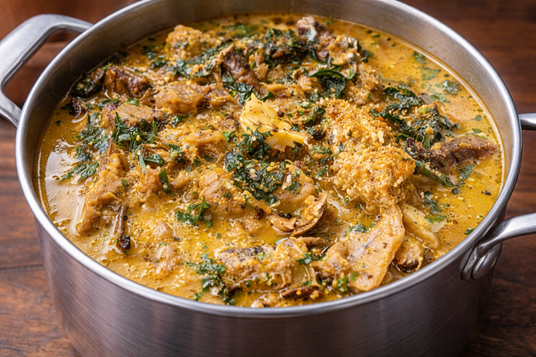
Your Ofe Akparata is now ready.
🌟 Tips For A Perfect Result ✅
- Always cook akparata on low heat to prevent bitterness
- Use fermented seeds, not raw ones
- Avoid excess palm oil
- Let the soup rest briefly before serving
- Taste and adjust seasoning gradually
🍽️ Serving Suggestions 🥄
Mahogany Seed Soup pairs excellently with:
- Pounded yam
- Garri (eba)
- Fufu
- Wheat swallow
Serve hot for maximum flavour.
🔄 Variations 🧩
You can personalise Mahogany Seed Soup by:
- Using smoked turkey or chicken
- Making it vegetarian with mushrooms
- Adding bitterleaf for complexity
📊 Nutritional Information (Approximate Per Serving)
| Nutrient | Amount | % Daily Value |
|---|---|---|
| Calories | 380 kcal | 19% |
| Protein | 28 g | 56% |
| Fat | 24 g | 31% |
| Iron | 6 mg | 33% |
| Fiber | 5 g | 18% |
Source: https://www.nutritionvalue.org
🌿 Health Benefits And Advice 💚
Ofe Akparata offers several health benefits:
- Supports digestion due to fermentation
- Rich in antioxidants
- Provides essential minerals
- Boosts gut health
Consume in moderation, especially if watching fat intake.
Note: The information provided in this blog post is for educational purposes only and is not intended as medical advice. Always consult with a healthcare professional before making significant changes to your diet.
❓ Frequently Asked Questions (FAQs)
Q1. Is Mahogany Seed Soup bitter?
👉 When cooked properly, Ofe Akparata is rich and savoury, not bitter.
Q2. Can I store Mahogany Seed Soup?
👉 Yes, refrigerate for up to 3 days.
Q3. Can I freeze Ofe Akparata?
👉 Yes, freeze in airtight containers for up to 1 month.
Q4. Is ogiri compulsory?
👉 No, it’s optional but enhances authenticity.
🌟 Final Thoughts ✨
Ofe Akparata (Mahogany Seed Soup) is a powerful, comforting, and deeply cultural Igbo delicacy that deserves a place in every Nigerian kitchen. This recipe preserves authenticity while remaining easy to follow. If you love exploring traditional Nigerian soups, Mahogany Seed Soup is a must-try dish that delivers flavour, nutrition, and heritage in every spoonful.
- Zucchini Recipes: Amazing Guide to Cooking Zucchini in 100+ Tasty Ways🥒🌟
- 30+ Popular Ways to Cook Spaghetti Around the World🌍
- How To Make Instant Pot Spaghetti – Delicious One-Pot Comfort Meal🍝🔥
- How To Make Leftover Stew Spaghetti: The Delicious Quick-Fix Recipe🍝
- How To Make Garlic Butter Spaghetti: Irresistible Comfort Pasta Recipe🧈

Did you make this recipe? Please do leave a comment and rating on the blog. Tag us on Pinterest @9jakitchen and Instagram @real9jakitchen and follow.