
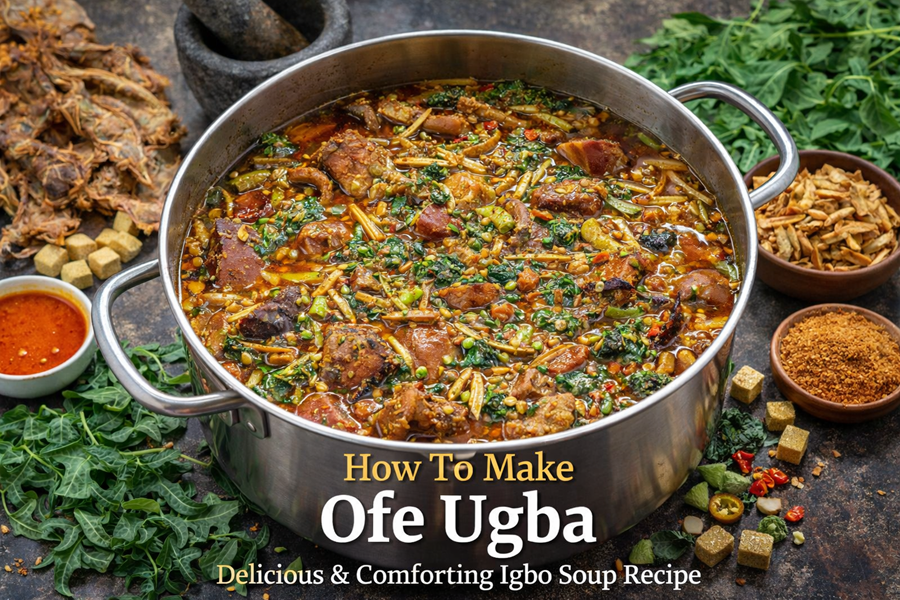

Learn how to make Ofe Ugba with this delicious, comforting, and authentic Igbo soup recipe. This step-by-step guide covers ingredients, tips, health benefits, and variations for perfect results every time.
🌟 Introduction
Ofe Ugba is one of the most cherished traditional soups in Igbo land, celebrated for its deep, earthy flavours and cultural significance. This hearty delicacy, made primarily with ugba (African oil bean), is more than just food—it is heritage in a bowl.
In this detailed guide, you’ll learn how to make Ofe Ugba using authentic techniques that preserve taste, texture, and nutritional value. Whether you are reconnecting with tradition or discovering this dish for the first time, this recipe guarantees a deeply satisfying result.
Prepared with palm oil, assorted proteins, local spices, and fermented oil bean slices, Ofe Ugba stands out as a comforting soup that pairs beautifully with traditional Nigerian swallows.
Table of Contents
❤️ Why You’ll Love This Recipe
You’ll fall in love with this Ofe Ugba recipe because it is:
- 🌿 Deeply flavourful with authentic Igbo ingredients
- 🥘 Comforting and filling without being heavy
- 🧬 Naturally rich in plant-based protein and healthy fats
- 🔥 Flexible enough for meat, fish, or vegetarian variations
- 🇳🇬 A true representation of traditional Nigerian Igbo soup
🧺 Ingredients Needed
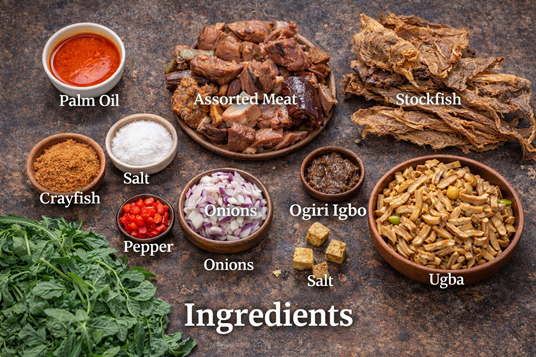
Below are the essential ingredients required to make authentic Ofe Ugba, along with brief descriptions:
- Ugba (African Oil Bean): Properly fermented and sliced; the star ingredient
- Palm Oil: Adds colour, richness, and traditional flavour
- Assorted Meat: Beef, goat meat, shaki, or kpomo for depth
- Stockfish: Smoked and softened for bold umami taste
- Dry Fish: Washed and deboned for extra flavour
- Crayfish: Ground for aroma and thickness
- Ogiri Igbo: Traditional fermented seasoning for authenticity
- Onions: Finely chopped for sweetness
- Pepper: Fresh or ground, adjusted to taste
- Uziza Leaves: Fresh or dried, finely sliced
- Salt: To balance flavours
- Seasoning Cubes: Optional but helpful for enhancement
🍲 Equipment Needed
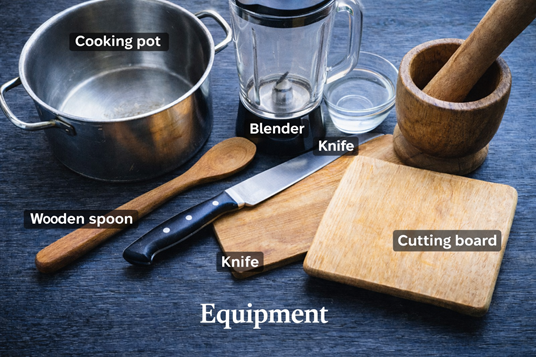
To prepare Ofe Ugba efficiently, you’ll need:
- Cooking pot (medium to large size)
- Wooden spoon
- Sharp kitchen knife
- Chopping board
- Blender or grinding stone (for crayfish and pepper)
🧑🍳 Step-By-Step Guide: How To Make Ofe Ugba
🔥 Step-By-Step Cooking Instructions
Step 1: Prepare The Proteins
- Wash assorted meat thoroughly
- Season lightly with salt, onions, and seasoning cubes
- Cook until tender, and reserve the stock
Step 2: Soften The Fish
- Soak the stockfish in hot water
- Clean dry fish properly and set aside
Step 3: Heat The Palm Oil
- Pour palm oil into a clean pot
- Heat gently without bleaching
Step 4: Build The Base
- Add chopped onions and stir
- Introduce crayfish and ogiri Igbo
- Stir until aromatic
Step 5: Add Proteins
- Add cooked meat, stockfish, and dry fish
- Stir gently to coat with oil
Step 6: Add Ugba
- Rinse ugba with warm water
- Add to the pot and mix evenly
Step 7: Season And Simmer
- Add pepper, salt, and seasoning cubes
- Pour in meat stock as needed
- Allow to simmer for 10–15 minutes
Step 8: Finish With Vegetables
- Add sliced uziza leaves
- Stir and cook for 2–3 minutes
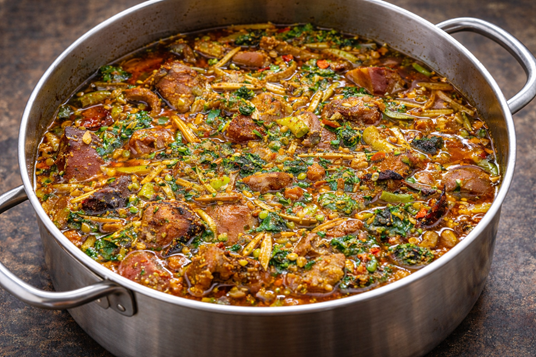
Your Ofe Ugba is now ready.
💡 Tips For A Perfect Result
For the best Ofe Ugba, follow these expert tips:
- 🌿 Always rinse ugba to reduce bitterness
- 🔥 Never overheat palm oil to avoid bitterness
- 🧂 Season gradually to avoid overpowering the soup
- 🥘 Allow the soup to simmer gently for flavour infusion
- 🌶 Adjust pepper after tasting, not before
🍽️ Serving Suggestions
Ofe Ugba is best served hot with:
- Pounded yam
- Fufu
- Eba (garri)
- Wheat swallow
It can also be enjoyed alone as a protein-rich bowl.
🔄 Variations
You can customise Ofe Ugba in several ways:
- 🐟 Fish-Only Version: Use smoked fish and dry fish only
- 🌱 Vegetarian Option: Skip meat and fish, increase ugba and mushrooms
- 🌶 Extra-Spicy Version: Add fresh habanero peppers
- 🥬 Leaf Swap: Use scent leaf if uziza is unavailable
📊 Nutritional Information (Approximate Per Serving)
| Nutrient | Amount | % DV |
|---|---|---|
| Calories | 420 kcal | 21% |
| Protein | 28 g | 56% |
| Fat | 32 g | 49% |
| Carbohydrates | 12 g | 4% |
| Fiber | 6 g | 24% |
| Iron | 4.5 mg | 25% |
🔗 Source: USDA FoodData Central↗
🩺 Health Benefits And Advice
Ofe Ugba offers several health benefits:
- 🧬 Ugba is rich in plant protein and healthy fats
- ❤️ Palm oil provides vitamin A and antioxidants
- 🦴 Stockfish and dry fish support bone health
- 🌿 Uziza aids digestion and metabolism
Consume in moderation if managing cholesterol due to palm oil content.
Note: The information provided in this blog post is for educational purposes only and is not intended as medical advice. Always consult with a healthcare professional before making significant changes to your diet.
❓ Frequently Asked Questions
Q1. What Is Ugba Made From?
👉 Ugba is made from fermented African oil bean seeds.
Q2. Can I Store Ofe Ugba?
👉 Yes, store in the refrigerator for up to 2 days and reheat gently.
Q3. Can I Cook Ofe Ugba Without Ogiri?
👉 Yes, but ogiri adds authentic flavour; crayfish can substitute partially.
Q4. Is Ofe Ugba Healthy?
👉 Yes, when eaten in moderation, it is nutritious and protein-rich.
🌟 Final Thought
Ofe Ugba is more than a meal—it is a cultural experience deeply rooted in Igbo tradition. With this detailed guide on how to make Ofe Ugba, you now have everything needed to recreate this comforting and powerful soup in your kitchen. Whether for family meals or special occasions, this recipe guarantees authenticity, flavour, and satisfaction.
Happy cooking from blog.9jakitchen.com 🍲✨
- Amazing Salad Recipes: 120+ Fresh & Healthy Ideas to Try Today🥗
- 47 Delicious High-Protein Recipes for All-Day Energy and Strength💪🥑
- Ultimate Delicious Shawarma Recipes You’ll Crave Daily 🌯✨
- 180+ Garlic Recipes: The Irresistible Flavour-Packed Guide You’ll Love🧄🌟
- Salsa Recipes: Delicious, Flavorful Guide You’ll Absolutely Love🌟🍅🌶️

Did you make this recipe? Please do leave a comment and rating on the blog. Tag us on Pinterest @9jakitchen and Instagram @real9jakitchen and follow.