
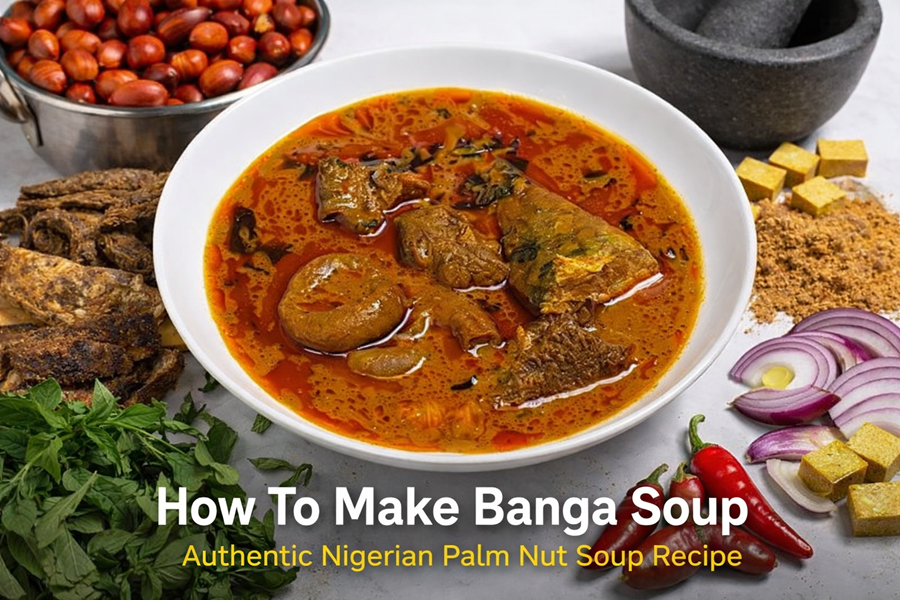

Learn how to make banga soup with this ultimate step-by-step Nigerian recipe. This delicious palm nut soup is rich, aromatic, authentic, and perfect for swallow lovers and family meals.
🌴 Introduction
Banga soup is one of Nigeria’s most iconic traditional soups, deeply rooted in the culinary heritage of the Niger Delta region. Known for its rich palm nut base, aromatic spices, and deep earthy flavour, banga soup stands out as a comfort dish that perfectly balances tradition, nutrition, and indulgence.
Whether you call it Ofe Akwu, palm nut soup, or simply banga soup, this dish has earned its place on Nigerian tables during festive gatherings, Sunday lunches, and special celebrations. What makes banga soup truly irresistible is its naturally oily richness, infused with native spices like ataiko, irugeje, and oburunbebe stick.
In this detailed guide, you’ll learn how to make banga soup from scratch using authentic techniques, practical tips, and flexible variations suitable for beginners and seasoned cooks alike.🌴✨
Table of Contents
❤️ Why You’ll Love This Recipe
You’ll fall in love with this banga soup recipe because:
- It delivers authentic Nigerian flavour without shortcuts
- The palm nut extract gives a naturally rich and silky texture
- It pairs perfectly with starch, eba, fufu, or pounded yam
- The recipe is customisable with beef, fish, or assorted meats
- It’s deeply satisfying, filling, and comforting
This is the kind of banga soup recipe you’ll return to again and again.
🧺 Ingredients Needed
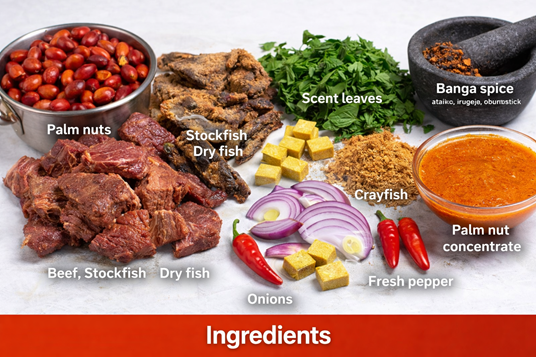
Below are the essential authentic banga soup ingredients required to prepare a traditional banga soup, along with brief explanations:
- Palm nuts or palm nut concentrate – This is the soul of banga soup, extracted to produce the thick, oily base
- Beef or assorted meat – Adds body, protein, and savoury depth
- Dry fish – Introduces a smoky, traditional flavour
- Stockfish – Enhances richness and umami
- Fresh or dried pepper – For controlled heat and aroma
- Onions – Adds sweetness and balances the palm oil richness
- Banga spice (ataiko, irugeje, oburunbebe) – The signature aroma of authentic banga soup
- Crayfish – Deepens flavour and earthiness
- Seasoning cubes – Boosts savoury taste
- Salt – Balances all flavours
- Scent leaves or dried bitterleaf – Finishing herb that ties everything together
📝 Tip: You can use canned palm nut extract if you don’t have access to fresh palm fruits.
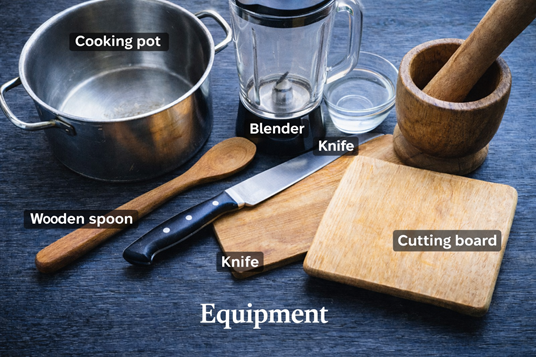
🍳Equipment Needed
You don’t need much — just these essential kitchen tools:
- Large cooking pot or saucepan
- Wooden spoon for stirring
- Blender or mortar (for grinding ingredients)
- Sieve or muslin cloth (for extracting palm fruit juice)
- Bowl for mixing
- Gas cooker or stovetop
👩🍳Step-by-Step Guide: How to Make Banga Stew
Step 1: Prepare the Palm Fruit Extract 🌴
- Wash the palm fruits thoroughly.
- Boil them until soft (about 20 minutes).
- Pound gently with a mortar and pestle to release the oil.
- Add warm water and squeeze out the juice, then sieve to remove chaff.
- This palm extract is the rich base of your Banga Stew.
Step 2: Season and Cook the Meat 🍖
- Wash and season your meat with salt, onions, seasoning cubes, and pepper.
- Add water and boil until tender.
- Set the stock aside — it will be used in the stew for depth of flavour.
Step 3: Cook the Palm Nut Extract 🍲
- Pour the palm fruit extract into a clean pot and bring to a gentle boil.
- Allow it to cook uncovered until it thickens and oil begins to rise to the surface (about 20–25 minutes).
- Skim off excess oil if necessary.
Step 4: Add Seasonings and Meat 🍛
- Add cooked meat, stock, crayfish, dry fish, and Banga spices.
- Stir gently and let everything simmer together for 10–15 minutes.
- Adjust seasoning with salt and seasoning cubes.
Step 5: Add Vegetables and Final Touches 🌿
- Stir in scent leaves or bitter leaves.
- Cook for another 3–5 minutes.
- Turn off the heat and allow the stew to rest — flavours deepen as it cools slightly.
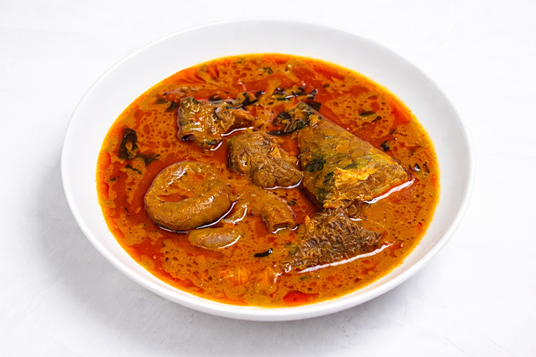

🌾Tips for Perfect Banga Soup
✅ Use fresh palm fruits for the richest flavour.
✅ Don’t rush the boiling and thickening stage — it’s key for the perfect texture.
✅ Add scent leaves last to preserve their aroma.
✅ You can mix meats (beef + fish) for a layered flavor.
✅ Avoid adding too much water; Banga Stew should be thick and flavorful.
🍚Serving Suggestions
Serve your Banga Soup hot with:
- Steamed white rice 🍚 (classic choice)
- Boiled yam or plantain 🍌
- Pounded yam or semovita 🍽️
- Or enjoy it with starch, like in Delta cuisine, for an authentic experience!
🥣Variations
- Seafood Banga Stew: Add prawns, periwinkles, or catfish.
- Vegetarian Banga Soup: Skip meat and use mushrooms or tofu.
- Spicy Banga Soup: Increase the pepper for extra heat.
- Coconut Banga Stew: Add coconut milk for a creamy twist.
📊Nutritional Information (Approximate per Serving)
| Nutrient | Amount | % Daily Value (DV) |
|---|---|---|
| Calories | 420 kcal | 21% |
| Fat | 36 g | 55% |
| Saturated Fat | 16 g | 80% |
| Protein | 18 g | 36% |
| Carbohydrates | 8 g | 3% |
| Fiber | 2 g | 8% |
| Sodium | 410 mg | 17% |
| Vitamin A | 950 IU | 19% |
| Iron | 3 mg | 17% |
| Potassium | 400 mg | 10% |
🔗 Source: USDA FoodData Central – Palm Oil↗ And Beef↗
🌿Health Benefits & Advice
Banga Stew isn’t just delicious — it’s nourishing!
- 🫶 Rich in Vitamin A & E: Promotes healthy skin and vision.
- 💪 Heart-Healthy Fats: The natural palm oil contains antioxidants that support cardiovascular health.
- 🧠 Boosts Brain Function: Palm fruit oil is a good source of tocotrienols.
- ⚡ Energy-Packed: Provides lasting energy for active lifestyles.
- 🩸 Iron-Rich: Aids red blood cell formation and combats fatigue.
Health Tip: Enjoy Banga Soup in moderation — it’s rich and oily, so balance it with lighter side dishes.
Note: The information provided in this blog post is for educational purposes only and is not intended as medical advice. Always consult with a healthcare professional before making significant changes to your diet.
❓Frequently Asked Questions (FAQs)
Q1: What’s the difference between Ofe Akwu and Banga Soup?
A: They are similar — but Banga Soup is the Igbo version (often served with rice), while Banga Soup is the Delta version (served with starch).
Q2: Can I make Banga Soup without scent leaves?
A: Yes! Substitute with basil or spinach for aroma if scent leaves aren’t available.
Q3: How long does it last?
A: Store in the fridge for 3–4 days or freeze for up to 1 month.
Q4: Can I use canned palm nut concentrate?
A: Absolutely — it saves time and still gives an authentic flavour.
Q5: What protein works best?
A: A mix of beef, smoked fish, and goat meat gives the richest taste.
🌴Banga Soup vs Ofe Akwu — What’s The Real Difference?
1. Regional Origin 🗺️
- Banga Soup
- Originates from the Niger Delta (Delta, Bayelsa, Rivers)
- Strongly associated with Urhobo, Itsekiri, and Ijaw cuisines
- Ofe Akwu
- Originates from the Igbo ethnic group (South-East Nigeria)
- Common in Anambra, Imo, Abia, and Enugu States
👉 Key difference: Same palm nut base, different ethnic roots
2. Spices & Aromatics (Biggest Difference) 🌿
- Banga Soup
- Uses native Niger Delta spices, such as:
- Ataiko
- Irugeje
- Oburunbebe stick
- These spices give banga soup its distinct smoky, earthy aroma
- Very fragrant and spice-forward
- Uses native Niger Delta spices, such as:
- Ofe Akwu
- Does not use ataiko or irugeje
- Relies on:
- Scent leaves
- Onions
- Crayfish
- Occasionally uziza
- Aroma is milder and more herbal
👉 This is the most important distinction
If it has ataiko/irugeje → banga soup
If it doesn’t → ofe akwu
3. Texture & Thickness 🥣
- Banga Soup
- Usually lighter and more oily
- Oil floats clearly on top when properly cooked
- Less leafy content
- Ofe Akwu
- Slightly thicker
- May include bitterleaf or scent leaf in larger quantity
- More “soup-like” consistency
4. Proteins Used 🍖
- Banga Soup
- Beef
- Dry fish
- Stockfish
- Seafood (periwinkle, prawns, fish) in coastal versions
- Ofe Akwu
- Beef
- Goat meat
- Chicken
- Stockfish and dry fish
- Less emphasis on seafood (though possible)
👉 Proteins can overlap, but the spice profile still defines the soup
5. Traditional Swallow Pairings 🍽️
- Banga Soup
- Traditionally eaten with starch (from cassava)
- Also eaten with eba or semovita
- Ofe Akwu
- Commonly paired with:
- Pounded yam
- Fufu
- Eba
- Commonly paired with:
🆚 Quick Comparison Table
| Feature | Banga Soup | Ofe Akwu |
|---|---|---|
| Ethnic Origin | Niger Delta | Igbo |
| Palm Nut Base | Yes | Yes |
| Native Spices | Ataiko, irugeje, oburunbebe | None |
| Aroma | Strong, smoky, spicy | Mild, herbal |
| Texture | Light, oily | Slightly thicker |
| Classic Swallow | Starch | Pounded yam, fufu |
✅ Final Clarification (Very Important)
All banga soup is palm nut soup, but not all palm nut soup is banga soup.
- If it uses Niger Delta native spices → it is banga soup
- If it’s palm nut–based without those spices → it is ofe akwu
🌟Final Thoughts
Banga Soup is more than just food — it’s a celebration of Nigeria’s culinary artistry. Every spoonful tells a story of tradition, flavour, and warmth. 🌴 Whether served on a Sunday afternoon or during festivities, this palm nut stew embodies comfort, heritage, and joy.
Try this authentic Nigerian palm nut soup recipe today and bring the irresistible taste of home to your kitchen. ❤️🍲
- 30+ Popular Ways to Cook Spaghetti Around the World🌍
- How To Make Instant Pot Spaghetti – Delicious One-Pot Comfort Meal🍝🔥
- How To Make Leftover Stew Spaghetti: The Delicious Quick-Fix Recipe🍝
- How To Make Garlic Butter Spaghetti: Irresistible Comfort Pasta Recipe🧈
- How To Make One-Pot Spaghetti: The Delicious Spaghetti Recipe🍯🍝

Did you make this recipe? Please do leave a comment and rating on the blog. Tag us on Pinterest @9jakitchen and Instagram @real9jakitchen and follow.