

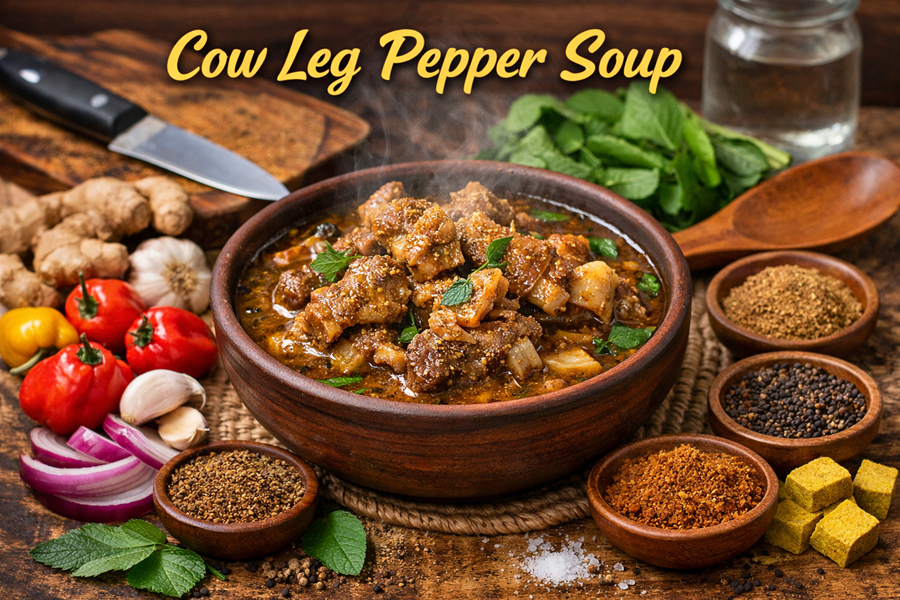

Learn how to make cow leg pepper soup with this comforting and powerful Nigerian recipe. This detailed guide covers ingredients, tips, variations, health benefits, and expert cooking advice for perfect results every time.
🥣 Introducing Cow Leg Pepper Soup
Cow leg pepper soup is one of the most cherished traditional soups in Nigerian cuisine, loved for its bold spices, deep flavour, and nourishing warmth. Learning how to make cow leg pepper soup at home allows you to enjoy a slow-simmered delicacy that is both comforting and satisfying.
This cow leg pepper soup recipe highlights tender cow leg pieces cooked in a fragrant broth infused with aromatic pepper soup spices, fresh herbs, and natural seasonings. Whether you are preparing it for family meals, special occasions, or wellness support during cold evenings, Nigerian cow leg pepper soup never disappoints.
In this detailed guide, you will discover how to make cow leg pepper soup step by step, including essential tips, variations, nutritional information, and expert advice to ensure perfect results every time.
Table of Contents
❤️ Why You’ll Love This Recipe
- Comforting and deeply warming for any season
- Rich, bold, and authentic Nigerian flavour
- High in collagen and essential nutrients
- Perfect for family meals, gatherings, and recovery days
- Easy to customise with spice level and herbs
- A classic cow leg pepper soup recipe that never goes out of style
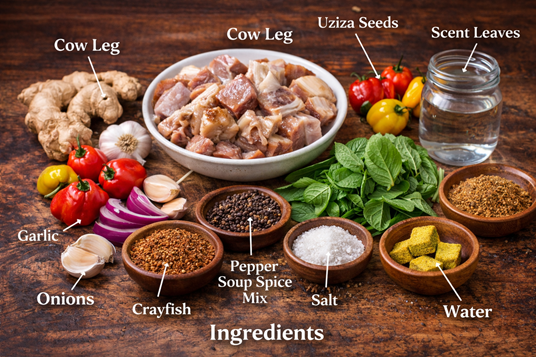
🧄 Ingredients Needed
- Cow Leg (Cow Foot): Cleaned and cut into medium pieces; provides rich flavour and gelatinous texture
- Pepper Soup Spice Mix: Traditional Nigerian blend that delivers warmth and aroma
- Scotch Bonnet Peppers: Adds controlled heat and depth
- Onions: Enhances sweetness and balance
- Crayfish: Intensifies umami flavor
- Uziza Seeds or Leaves: Optional but authentic pepper soup aroma
- Scent Leaves (Nchuanwu): Fresh herbal finish
- Garlic: Boosts flavor complexity
- Ginger: Adds warmth and digestive support
- Seasoning Cubes: Enhances savoury taste
- Salt: Adjusted to taste
- Water or Stock: Forms the soup base
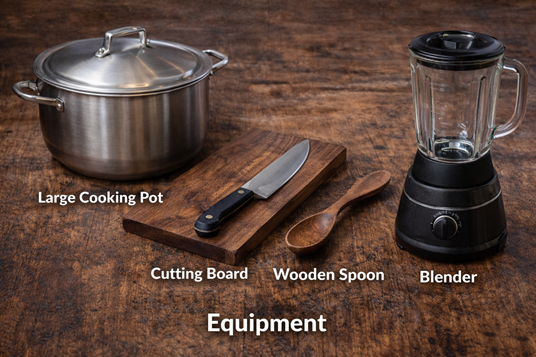
🍳 Equipment Needed
- Large heavy-bottom pot
- Sharp kitchen knife
- Cutting board
- Measuring spoons
- Wooden spoon or ladle
🔥 Step-By-Step Guide: How To Make Cow Leg Pepper Soup
Step 1: Clean And Prep The Cow Leg
- Wash the cow’s leg thoroughly with clean water
- Scrape and rinse to remove impurities
- Cut into manageable pieces
Step 2: Parboil For Tenderness
- Place a cow leg in a pot
- Add chopped onions, salt, and seasoning
- Cook for 10–15 minutes to remove excess impurities
Step 3: Cook Until Soft
- Add fresh water to cover the meat
- Simmer until the cow leg becomes tender
- Cooking time may vary depending on the texture
Step 4: Add Spices And Aromatics
- Stir in pepper soup spice mix
- Add blended scotch bonnet, garlic, and ginger
- Include crayfish and uziza seeds if using
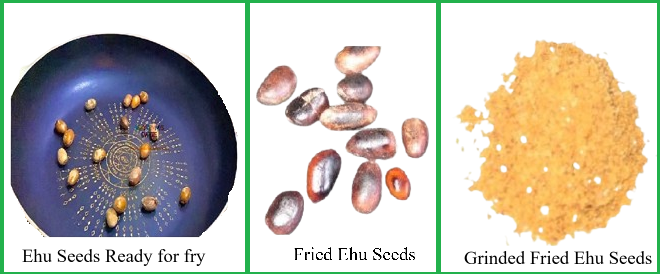
Step 5: Add the secret Ingredients, Calabar Nutmeg
- Use an old frying pan to roast the Ehu seeds.
- Stir the seeds constantly while roasting.
- Monitor for a distinctive aroma to know when they’re done.
- Optionally, test if the seeds are ready by trying to remove the outer membrane from one seed.
- If the membrane comes off easily, the Ehu seeds are done.
- Peel off the membrane from all the Ehu seeds.
- Grind the peeled seeds using a dry mill.
Step 6: Finish With Herbs
- Add chopped scent leaves or uziza leaves
- Simmer briefly and turn off the heat
Your cow leg pepper soup is now rich, aromatic, and ready to serve.
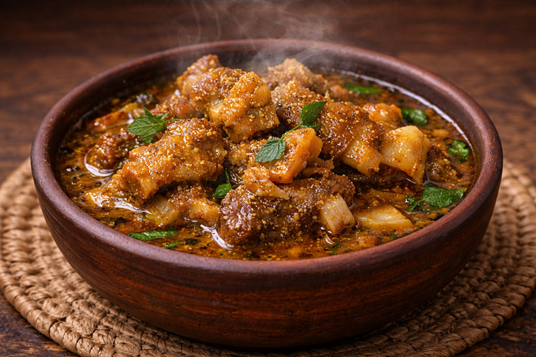
💡 Tips for Making Delicious Cow Leg Pepper Soup
- Choose the Right Cow Leg: Opt for a fresh cow leg with plenty of meat and some tendons for that authentic texture. A mix of shank and trotters can add rich flavours.
- Prepping the Meat: Clean the cow leg thoroughly. Boiling it in water with a bit of vinegar or lemon juice can help remove any residual smell.
- Seasoning: Use a blend of traditional spices. Ingredients like peppercorns, uziza seeds, and a mix of fresh chillies can bring great heat and flavour. Don’t forget to add aromatics like onions and garlic.
- Cook Low and Slow: For maximum tenderness, cook the cow leg on low heat. This allows the collagen in the tendons to break down, resulting in a rich and flavorful broth.
- Add Water Gradually: Start with a small amount of water and add more as the soup cooks down. This helps concentrate the flavours.
- Herbs and Leaves: Incorporate scent leaves, which add a wonderful aroma. You can also use basil or other fragrant herbs as alternatives.
- Taste as You Go: Regularly taste the broth for the right balance of heat and seasoning. Adjust as needed to ensure the final flavour is just right.
- Don’t Rush the Cooking: Allow sufficient time for the flavours to meld together. A longer cooking time can deepen the soup’s complexity.
- Let It Rest: After cooking, let the soup sit for a bit before serving. This resting time can enhance the flavours even further.
- Serve with Sides: Traditional accompaniments like rice, pounded yam, or plantains can elevate your meal.
By following these tips, you’re sure to create a comforting and delicious cow leg pepper soup that everyone will enjoy!
🍽️ Serving Suggestions
- Serve hot as a standalone meal
- Pair with boiled yam, rice, or agidi
- Enjoy as a warming evening dish
- Ideal for festive occasions and family gatherings
🔄 Variations
- Extra Spicy Cow Leg Pepper Soup: Increase scotch bonnet peppers
- Herbal-Infused Version: Add basil or scent leaf blend
- Low-Salt Option: Reduce seasoning cubes and rely on herbs
- Smoky Flavour: Add smoked spices or smoked cow leg
📊 Nutritional Information (Approximate Per Serving)
| Nutrient | Amount | % Daily Value (DV) |
|---|---|---|
| Calories | 320 kcal | 16% |
| Protein | 28 g | 56% |
| Fat | 18 g | 23% |
| Collagen | High | — |
| Iron | 4 mg | 22% |
| Calcium | 60 mg | 6% |
| Sodium | 520 mg | 23% |
Source: Cow Leg↗
🌿 Health Benefits & Advice
Cow leg pepper soup is naturally rich in collagen, which supports joint health, skin elasticity, and connective tissues. The warming spices in Nigerian cow leg pepper soup aid digestion and improve circulation. Ginger and garlic contribute anti-inflammatory properties, while the hot broth helps relieve cold symptoms and fatigue.
This cow leg pepper soup recipe is often recommended during recovery periods and postpartum care due to its nourishing qualities.
❓ Frequently Asked Questions
Q1. Can I cook cow leg pepper soup without a pressure cooker?
👉 Yes, simmer slowly on low heat until tender; it may take longer, but it yields excellent flavour.
Q2. How spicy should cow leg pepper soup be?
👉 Spice level is adjustable; start mild and increase gradually.
Q3. Can I store leftover cow leg pepper soup?
👉 Yes, refrigerate for up to 3 days or freeze for longer storage.
Q4. Is cow leg pepper soup healthy?
👉 Absolutely, it is rich in protein, collagen, and warming spices.
📝 Final Thought
Mastering how to make cow leg pepper soup is a rewarding culinary experience that connects tradition, flavour, and nourishment. This comforting Nigerian classic remains a timeless favourite for good reason. With the right spices, patience, and care, your homemade cow leg pepper soup will always deliver warmth, depth, and satisfaction.
If you are looking for a powerful, authentic, and deeply comforting dish, this cow leg pepper soup recipe deserves a permanent spot in your kitchen.
- How to Make Pineapple Coconut Salad: A Delicious Fresh Zesty Delight🍍🥥✨
- How to Make Nigerian Salad: A Delicious Fresh Delight 🥗🇳🇬✨
- How to Make Ginger Carrot Salad: A Delicious Crunchy Delight🥕✨
- Amazing Salad Recipes: 120+ Fresh & Healthy Ideas to Try Today🥗
- 47 Delicious High-Protein Recipes for All-Day Energy and Strength💪🥑

Did you make this recipe? Please do leave a comment and rating on the blog. Tag us on Pinterest @9jakitchen and Instagram @real9jakitchen and follow.








Hello there, just became aware of your blog through Google, and found that it is truly informative. I’m going to watch out for brussels. I will appreciate if you continue this in future. Numerous people will be benefited from your writing. Cheers!