
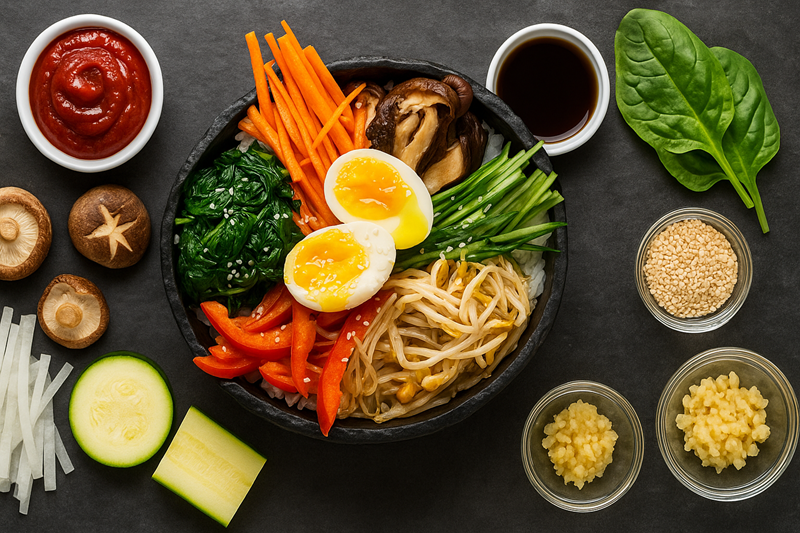

Discover how to make Bibimbap (Korean Rice Bowl) with vibrant vegetables, savory beef, and spicy gochujang. A wholesome, colorful dish packed with flavor, texture, and nutrition.
Introduction 🌸
How to make Bibimbap (Korean Rice Bowl) is a question every food lover should ask when craving a balanced, colourful, and comforting meal. This beloved Korean dish combines steamed rice with seasoned vegetables, savoury beef, a perfectly fried egg, and a drizzle of spicy-sweet gochujang sauce. Bursting with texture and taste, Bibimbap is not only visually stunning but also packed with nutrients that nourish the body and soul.
In this guide, you’ll learn everything you need to create authentic Bibimbap (Korean Rice Bowl) at home—from essential ingredients and equipment to expert tips and nutritional facts.
Table of Contents
What Is Bibimbap?🍚
“Bibimbap” (비빔밥) literally means “mixed rice”—bibim = mixing, bap = rice↗.
It’s a classic Korean rice bowl dish: steamed white rice topped with a variety of seasoned vegetables (namul), protein (egg, meat, tofu), and a dollop of gochujang (Korean chilli paste). Just before eating, everything is stirred (“mixed”) together↗.
Over time, bibimbap has become a signature dish loved worldwide for its flavour, flexibility, and balance↗.
Ingredients for Authentic Bibimbap 🥬🍳
For the Rice
- 2 cups short-grain white rice (cooked)
For the Vegetables
- 1 cup spinach (blanched)
- 1 cup bean sprouts (blanched)
- 1 cup carrots (julienned)
- 1 cup shiitake mushrooms (sliced)
- 1 small zucchini (julienned)
For the Beef Marinade
- 200 g beef sirloin (thinly sliced)
- 1 tbsp soy sauce
- 1 tsp sesame oil
- 1 clove garlic (minced)
- 1 tsp sugar
Other Essentials
- 2 eggs (fried sunny-side up)
- 2 tbsp gochujang (Korean chilli paste)
- 1 tsp sesame seeds
- 1 tbsp vegetable oil
Equipment Needed🍽️
- Medium saucepans or pots (for blanching vegetables)
- Nonstick skillet or frying pan
- Large mixing bowls
- Wooden spoon or spatula
- Sharp knife & cutting board
- Measuring spoons & cups
- Serving bowls (deep bowls)
- (Optional) Dolsot (Korean hot stone bowl) or cast-iron bowl
Step-by-Step: How to Make Bibimbap (Korean Rice Bowl)🥘
Step 1: Cook the Rice
- Cook your short-grain rice as usual—rinse until water runs clear, then steam or cook.
- The rice should be warm, somewhat sticky, and ready to receive toppings.
Step 2: Prepare Vegetable Components
Each vegetable is typically processed individually, so colours and flavours stay distinct.
- Spinach: Blanch in boiling water for 30–45 seconds, drain, and squeeze out excess water. Mix with a little sesame oil, minced garlic, and salt.
- Bean sprouts: Blanch until tender, drain, and season with sesame oil, garlic, and salt.
- Carrot & zucchini: In a skillet, stir-fry each separately with a bit of oil, salt until tender but still crisp.
- Mushrooms: Stir-fry sliced mushrooms with a bit of oil, garlic, and soy sauce until nicely browned.
- Radish (if using): Stir or sauté until tender, season lightly.
Arrange each prepared vegetable in small, neat piles (radial fashion) around a bowl of rice later.
Step 3: Make the Bibimbap Sauce
In a small bowl, whisk together:
- Gochujang
- Soy sauce
- Sesame oil
- Minced garlic
- Sugar or honey
- A little water (to thin slightly)
Adjust sweetness, spice, and consistency to your liking.
Step 4: Cook the Eggs
- In a lightly oiled skillet, fry each egg (sunny side, over-easy, or even raw yolk in a hot stone bowl). The runny yolk helps bind the bibimbap when mixed.
Step 5: Assemble the Korean Rice Bowl
- Place warm rice into each bowl.
- Arrange each seasoned vegetable (spinach, sprouts, carrot, zucchini, mushrooms, radish) in segments on top of the rice.
- Gently place the fried egg on top.
- Drizzle with the bibimbap sauce.
- Sprinkle sesame seeds.
If you’re using a stone bowl (dolsot), preheat it, brush with sesame oil, then add rice so the bottom crisps as you assemble the bibimbap.
Step 6: Serve & Mix
- Serve immediately. Just before eating, stir everything together thoroughly so rice, veggies, sauce, and egg meld beautifully.
 Your Bibimbap (Korean Rice Bowl) is ready to enjoy!
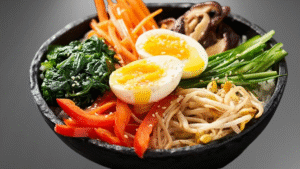
Bibimbap (Korean Rice Bowl)
Tips for the Best Bibimbap Experience ✨
- Prep ahead: You can blanch and season all vegetables a few hours or even a day ahead (store separately, not mixed).
- Colour contrast: Use a variety of colourful vegetables (green spinach, orange carrot, brown mushrooms, white sprouts) to make it visually appealing.
- Crispy rice bottom (nurungji): If using a dolsot or cast-iron bowl, you can get a crispy bottom layer. That texture is highly prized.
- Adjust sauce heat: If gochujang is too spicy, mix with a bit of honey or sugar to soften the punch.
- Vegan option: Replace egg with silken tofu or omit altogether.
- Don’t overcrowd vegetables: Let each vegetable “stand out” — mixing too early leads to mushy colours.
- Warm bowls: Serve in bowls that retain warmth, so the rice and sauce don’t cool too fast.
- Taste while assembling: Sample each component as you build so you can tweak salt, oil, or sauce ratio.
Nutritional Information (Approx. per Serving)📊
| Nutrient | Amount |
|---|---|
| Calories | ~ 395 kcal |
| Total Fat | ~ 19 g |
| Carbohydrates | ~ 45 g |
| Protein | ~ 14 g |
| Dietary Fiber | ~ 5 g |
| Sodium | ~ 1,086 mg |
Source: Allrecipes Vegetarian Bibimbap nutrition label. Allrecipes↗
Note: If you add beef, chicken, or extra oil/sauce, these numbers will shift upward.
Frequently Asked Questions (FAQ)
Q1: Can I use brown rice instead of white rice?
👉Yes. You can substitute with brown short-grain rice. The texture will be firmer; soak or precook appropriately.
Q2: Can I skip meat or egg and still call it bibimbap?
👉Absolutely — a vegetarian or vegan bibimbap is common. Use tofu or just vegetables, and the dish is still bibimbap.
Q3: Where can I find gochujang?
👉Check Asian or Korean grocery stores (or their online shops). Gochujang is crucial for authentic bibimbap flavour.
Q4: How spicy should the sauce be?
👉It’s up to you. Start mild, then adjust. The goal is harmony—not overwhelming heat.
Q5: How to store leftovers?
👉Store rice and vegetables separately (without sauce). Reheat rice and veggies, then combine and drizzle with sauce just before eating.
Final Thoughts
By following this bibimbap recipe, you’ll bring the vibrant flavours and nourishing balance of a classic Korean rice bowl into your own kitchen. The secret lies in layering flavours, maintaining distinct textures, and finishing with a spicy, savoury sauce. Once you master how to make bibimbap, you can customize endlessly to your taste. Enjoy mixing, savouring, and sharing 🥣!
- How to Make Pineapple Coconut Salad: A Delicious Fresh Zesty Delight🍍🥥✨
- How to Make Nigerian Salad: A Delicious Fresh Delight 🥗🇳🇬✨
- How to Make Ginger Carrot Salad: A Delicious Crunchy Delight🥕✨
- Amazing Salad Recipes: 120+ Fresh & Healthy Ideas to Try Today🥗
- 47 Delicious High-Protein Recipes for All-Day Energy and Strength💪🥑

Did you make this recipe? Please do leave a comment and rating on the blog. Tag us with your picture on Instagram @real9jakitchen