
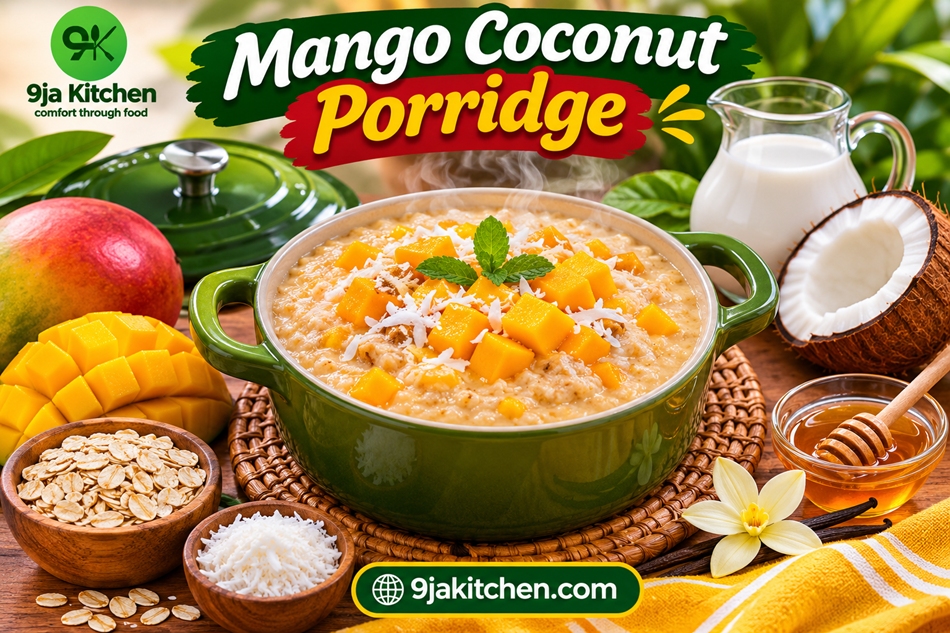

Enjoy creamy Mango Coconut Porridge with juicy mangoes, coconut milk and wholesome oats. An easy, delicious tropical breakfast recipe for the whole family!
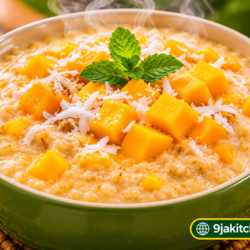
Imagine waking up to the irresistible aroma of creamy coconut, sweet tropical mangoes and warm, freshly cooked oats. Your breakfast bowl is filled with golden-yellow mango pieces, beautifully blended into a thick, velvety porridge, with delicate coconut flakes sprinkled over the top. That is exactly what makes Mango Coconut Porridge such a delightful way to begin the day. It brings together familiar breakfast comfort and exciting tropical flavours in one delicious bowl.
If you enjoy experimenting with breakfast recipes, this combination deserves a special place in your kitchen. Mango Coconut Porridge combines the natural sweetness of ripe mangoes with the gentle richness of coconut milk and the satisfying texture of rolled oats. Unlike ordinary oatmeal, this tropical mango porridge recipe offers a fruity flavour that feels refreshing while remaining wonderfully comforting. Whether you are preparing breakfast for your family, planning a weekend brunch or looking for easy tropical breakfast recipes, this dish is a lovely option.
The beauty of Mango Coconut Porridge is that it requires simple ingredients, straightforward preparation and very little kitchen experience. You do not need complicated equipment or expensive ingredients to achieve a delicious result. With fresh mangoes, coconut milk, oats and a few flavourful additions, you can prepare a homemade breakfast that looks beautiful and tastes even better. It is also easy to customise with bananas, chia seeds, toasted coconut or your favourite toppings. Let’s explore how to prepare this creamy coconut oatmeal and create a breakfast everyone will look forward to eating.
Table of Contents
🥣 Recipe At A Glance
Mango Coconut Porridge is a warm, creamy breakfast featuring rolled oats cooked with coconut milk and topped with fresh mango.
Mango Coconut Porridge
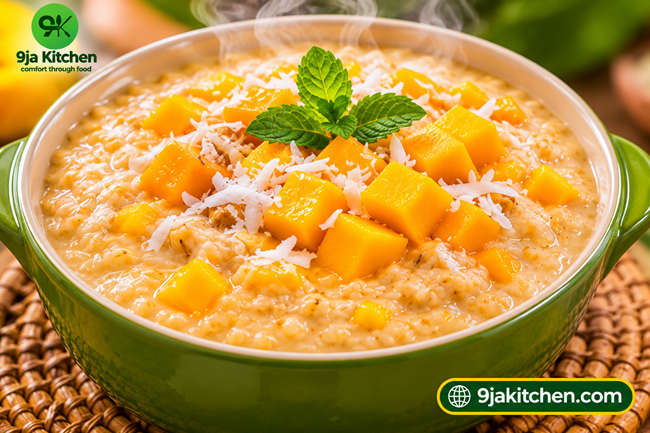
Enjoy a delicious tropical breakfast made with creamy coconut milk, wholesome rolled oats, sweet ripe mangoes and fragrant coconut. This easy homemade porridge is perfect for family breakfasts and weekend brunches.
Easy Recipe❤️ Why You’ll Love This Recipe
There are plenty of reasons to make Mango Coconut Porridge part of your breakfast routine. It is simple, colourful, delicious and wonderfully versatile.
- 🥭 Naturally Sweet And Fruity: Ripe mangoes provide a beautiful tropical sweetness, reducing the need for excessive added sugar. Every spoonful delivers a lovely combination of fruity and creamy flavours.
- 🥥 Rich And Creamy Texture: Coconut milk gives the porridge a smooth consistency and a delicate coconut aroma. It transforms ordinary oatmeal into something special.
- 🌾 Made With Wholesome Ingredients: Rolled oats provide dietary fibre and complex carbohydrates, making this breakfast a satisfying addition to a balanced eating pattern.
- ⏰ Easy To Prepare: You can prepare this mango breakfast recipe in approximately 30 minutes using everyday kitchen equipment.
- 👨👩👧👦 Perfect For Family Breakfasts: The recipe makes six servings, making it convenient when preparing breakfast for several people.
- 🌱 Easy To Customise: You can use plant-based milk, chia seeds, bananas, cinnamon or different tropical fruits to create your preferred combination.
- 🌞 Beautiful Tropical Flavours: Mango and coconut complement each other naturally, giving this breakfast a delicious island-inspired character.
- 🍽️ Suitable For Different Occasions: Serve it as a weekday breakfast, a relaxed weekend brunch or a comforting afternoon meal.
🛒 Ingredients For Mango Coconut Porridge
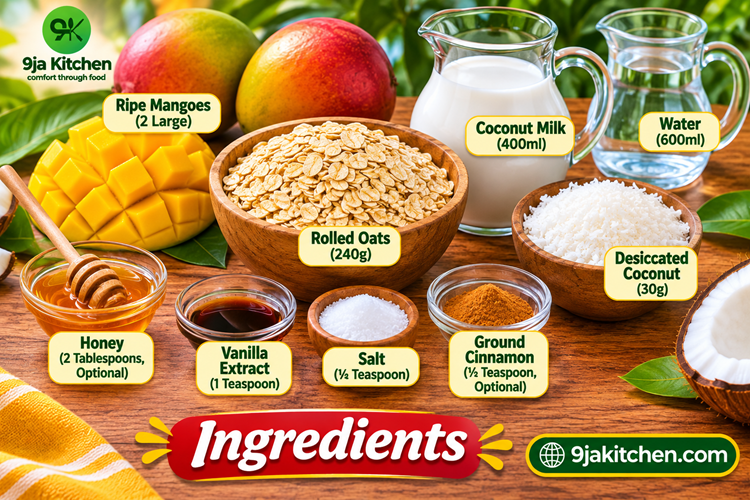
For the best results, choose fragrant, fully ripe mangoes with naturally sweet flesh. Use good-quality rolled oats and unsweetened coconut milk so you can control the sweetness and consistency of your porridge.
- 🥭 2 Large Ripe Mangoes (Approximately 400g Prepared Flesh): Peel, remove the stones and cut into small cubes. Reserve some mango pieces for decorating the finished porridge. The remaining fruit will provide natural sweetness and a beautiful tropical flavour.
- 🌾 240g Rolled Oats: These form the foundation of the recipe. Rolled oats absorb the coconut milk and cooking liquid, producing a thick, satisfying porridge. Traditional rolled oats are preferable to instant oats because they retain a pleasant texture.
- 🥥 400ml Unsweetened Coconut Milk: This provides the characteristic coconut flavour and creamy consistency. Light coconut milk is a useful choice if you prefer a less rich breakfast.
- 💧 600ml Water: Water helps the oats cook evenly without making the coconut flavour excessively heavy. Adjust the quantity slightly depending on your preferred thickness.
- 🥥 30g Desiccated Coconut: Adds extra coconut flavour and a delicate texture. Keep a little aside for garnishing.
- 🍯 2 Tablespoons Honey (Optional): Adds gentle sweetness if your mangoes are not sufficiently ripe. You can omit it or use maple syrup for a completely plant-based version.
- 🌼 1 Teaspoon Vanilla Extract: Gives the porridge a pleasant aroma and complements the mango and coconut flavours.
- 🧂 ¼ Teaspoon Salt: Balances the sweetness and enhances the overall flavour without making the porridge taste salty.
- 🌿 ½ Teaspoon Ground Cinnamon (Optional): Adds gentle warmth and a lovely fragrance.
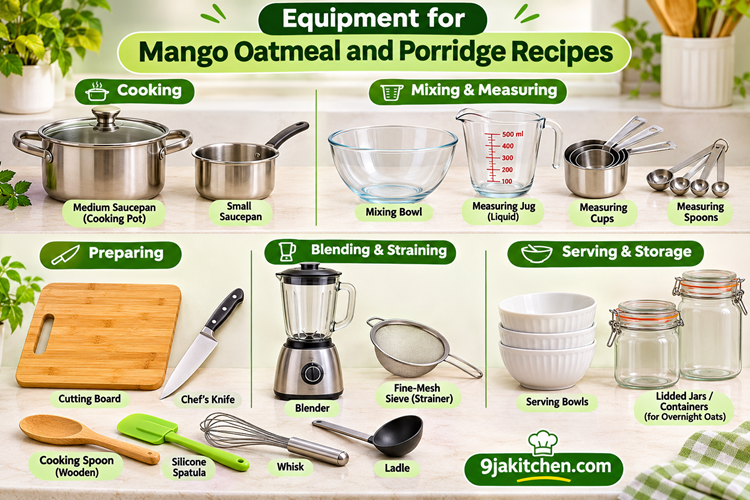
🍳 Equipment Needed
You do not need specialised equipment to prepare this easy tropical breakfast.
- 🍲 Large Heavy-Based Saucepan: Provides enough room for the oats and liquid to cook evenly without overflowing.
- 🥄 Wooden Spoon Or Silicone Spatula: Useful for stirring the oats and preventing them from sticking to the bottom of the saucepan.
- 🔪 Sharp Kitchen Knife: For peeling and cutting the mangoes into neat cubes.
- 🥭 Chopping Board: Provides a clean, stable surface for preparing the fruit.
- 🥣 Measuring Jug: Helps you measure the coconut milk and water accurately.
- ⚖️ Kitchen Scales: Useful for measuring the oats and desiccated coconut.
- 🥄 Measuring Spoons: For measuring the vanilla extract, salt, cinnamon and honey.
- 🍽️ Serving Bowls And Spoons: For presenting and enjoying the finished breakfast.
👩🍳 Step-By-Step Instructions For Making Mango Coconut Porridge
Cooking Instructions:
Follow these simple instructions to prepare perfectly creamy Mango Coconut Porridge with tender oats, fragrant coconut and delicious pieces of fresh mango.
🥭 Step 1: Prepare The Mangoes
- Wash the mangoes thoroughly under clean running water.
- Peel away the skin using a sharp knife or vegetable peeler.
- Slice the flesh away from the central stones.
- Cut the mango flesh into small, evenly sized cubes.
- Separate approximately one-third of the mango pieces for topping.
- Set the remaining mango aside for adding to the porridge.
For the best flavour, use naturally sweet mangoes that are ripe but still firm enough to hold their shape. Very soft mangoes can also be used, particularly if you prefer a smoother consistency.
🌾 Step 2: Measure And Prepare The Oats
- Measure 240g of rolled oats.
- Check the oats for any unwanted particles.
- Place them in a clean bowl ready for cooking.
- Measure the water and coconut milk separately.
Using the correct quantities helps you achieve the desired consistency. Mango Coconut Porridge should be thick and creamy rather than watery or excessively stiff.
🥥 Step 3: Heat The Coconut Milk And Water
- Place a large saucepan over medium heat.
- Pour in the 600ml of water.
- Add the 400ml of coconut milk.
- Stir gently to combine the liquids.
- Add the salt and vanilla extract.
- Allow the mixture to heat until it begins to steam gently.
Avoid allowing the coconut milk to boil vigorously. Gentle heating helps maintain its smooth consistency and prevents unnecessary splashing.
🍲 Step 4: Add The Rolled Oats
- Pour the rolled oats into the warm coconut mixture.
- Stir immediately using a wooden spoon or silicone spatula.
- Reduce the heat to medium-low.
- Allow the oats to simmer gently for approximately 12–15 minutes.
- Stir every few minutes to prevent sticking.
- Continue cooking until the oats soften and the mixture becomes creamy.
If the porridge becomes too thick before the oats are completely tender, add a little warm water and stir thoroughly.
🥭 Step 5: Add The Fresh Mango
- Add approximately two-thirds of the prepared mango cubes to the saucepan.
- Stir gently to distribute the fruit throughout the oats.
- Allow the mixture to cook for another 3–5 minutes.
- Use the back of your spoon to mash a few mango pieces gently.
- Leave some pieces intact for delicious fruity bites.
This is where Mango Coconut Porridge develops its wonderful tropical character. The mango releases some of its natural juices, blending with the coconut milk and creating a beautifully fragrant breakfast.
🍯 Step 6: Adjust The Sweetness And Flavour
- Taste the porridge carefully.
- Add the honey if you prefer a sweeter result.
- Sprinkle in the optional ground cinnamon.
- Stir gently until everything is evenly distributed.
- Add a little extra coconut milk or warm water if the mixture is too thick.
Remember that ripe mangoes already contain natural sugars, so additional sweetener may not be necessary.
🥥 Step 7: Add The Desiccated Coconut
- Add most of the desiccated coconut to the saucepan.
- Stir gently to combine.
- Allow the porridge to simmer for another minute.
- Remove the saucepan from the heat.
The coconut adds another layer of flavour and gives the finished dish a more pronounced tropical character.
🍽️ Step 8: Serve And Garnish
- Allow the porridge to rest for approximately 2 minutes.
- Divide it evenly between six serving bowls.
- Arrange the reserved fresh mango cubes over each portion.
- Sprinkle with the remaining desiccated coconut.
- Add a few toasted coconut flakes if desired.
- Serve warm while the texture is smooth and creamy.
Your homemade Mango Coconut Porridge is now ready to enjoy!🎉

⭐ Expert Tips For The Best Mango Coconut Porridge
A few simple techniques can make a noticeable difference to the flavour, texture and presentation of your breakfast.
- 🥭 Choose Properly Ripened Mangoes: The quality of your mangoes has a major influence on the finished flavour. Choose fruit that gives slightly when pressed and has a pleasant fragrance near the stem. Avoid mangoes that are excessively sour or bruised.
- 🌾 Use Rolled Oats For Better Texture: Traditional rolled oats produce a pleasantly thick consistency while retaining some texture. Instant oats cook faster but may produce a softer, less defined result.
- 🥥 Select Your Coconut Milk Carefully: Canned coconut milk is generally thicker and richer than carton coconut drinks. For a lighter breakfast, choose reduced-fat coconut milk or use a mixture of coconut milk and water.
- 🔥 Cook Over Medium-Low Heat: High heat can cause the mixture to stick to the bottom of the pan. Gentle cooking gives the oats enough time to absorb the liquid and soften properly.
- 🥄 Stir Regularly: Stirring prevents the oats from clumping together and helps distribute the coconut milk evenly throughout the saucepan.
- 🍯 Taste Before Adding Sweetener: Mangoes vary in sweetness. Taste the fruit before deciding whether honey or another sweetener is necessary.
- 🥭 Keep Some Mango For Garnishing: Adding fresh mango at the end provides a refreshing contrast to the warm, creamy oats.
- 🥥 Toast Your Coconut Flakes: Lightly toast a small quantity of coconut in a dry frying pan over low heat until golden. Sprinkle over the finished breakfast for extra aroma and crunch.
- 💧 Adjust The Consistency: Oats continue absorbing liquid as they cool. Keep some warm water or coconut milk available to loosen the mixture before serving.
- 🍲 Use A Heavy-Based Pan: A good saucepan distributes heat more evenly and reduces the likelihood of the porridge burning.
🍽️ Serving Suggestions
Although Mango Coconut Porridge tastes wonderful on its own, you can make breakfast even more exciting with a selection of delicious toppings and accompaniments.
- 🥭 Fresh Mango Slices: Add extra ripe mango slices for a colourful presentation and stronger fruity flavour.
- 🥥 Toasted Coconut Flakes: Sprinkle toasted coconut over the top for a pleasant crunch and a more pronounced coconut aroma.
- 🍌 Fresh Banana: Arrange sliced banana over the porridge for additional natural sweetness and a soft, creamy texture.
- 🥜 Chopped Nuts: Almonds, cashews and walnuts provide a delicious crunch.
- 🌱 Chia Seeds: Sprinkle chia seeds over each serving for additional dietary fibre and plant-based omega-3 fatty acids.
- 🍓 Fresh Berries: Strawberries, blueberries and raspberries add colour and a refreshing contrast to the sweetness of the mango.
- 🍯 A Light Honey Drizzle: A small drizzle of honey creates a lovely finish for anyone who enjoys a sweeter breakfast.
- 🥛 A Glass Of Milk: Serve alongside your favourite milk or unsweetened plant-based drink for a more substantial breakfast.
- ☕ Breakfast Tea: Enjoy with a cup of tea or coffee for a relaxed morning meal.
🌈 Recipe Variations
One of the best things about Mango Coconut Porridge is how easily you can adapt it to suit different tastes and dietary preferences.
- 🍌 Mango Banana Coconut Porridge: Add one ripe banana during the final cooking stage. Mash some of it into the oats for extra creaminess and natural sweetness.
- 🌱 Vegan Mango Coconut Porridge: Use unsweetened coconut milk and replace honey with maple syrup or leave out the sweetener altogether.
- 🥜 Mango Coconut Peanut Butter Porridge: Stir in one or two tablespoons of smooth peanut butter for a richer flavour and additional protein.
- 🌾 Mango Coconut Chia Porridge: Add one or two tablespoons of chia seeds during cooking. Allow the mixture to simmer gently until the seeds begin to absorb liquid.
- 🍍 Mango Pineapple Coconut Porridge: Add small pineapple pieces for an even more tropical flavour. The combination of mango, pineapple and coconut is particularly refreshing.
- 🍫 Chocolate Mango Coconut Porridge: Add a teaspoon of unsweetened cocoa powder for a chocolate-inspired variation. Chocolate and mango create an interesting flavour combination.
- 🌰 Mango Almond Coconut Porridge: Replace part of the coconut milk with unsweetened almond milk and finish with toasted almonds.
- 🍚 Mango Coconut Rice Porridge: Replace the oats with cooked rice and simmer gently with coconut milk until the mixture becomes creamy. This creates a different but equally comforting breakfast.
- 🥭 Smooth Mango Coconut Porridge: Blend some of the ripe mango with coconut milk before adding it to the oats. This creates a smoother, fruitier consistency.
- 🌿 Mango Ginger Coconut Porridge: Add a small amount of freshly grated ginger for a gentle warming flavour that balances the sweetness of the fruit.
Mango Coconut Porridge Recipe
Equipment
- 1 Large heavy-based saucepan
- 1 Wooden Spoon or Silicone Spatula:
- 1 Sharp Kitchen Knife
- 1 Chopping Board
- 1 Measuring Jug –
- Kitchen Scales
- Measuring Spoons
- Serving bowls and spoons
Ingredients
- 2 large ripe mangoes – approximately 400g prepared flesh
- 240 g rolled oats
- 400 ml unsweetened coconut milk
- 600 ml water
- 30 g desiccated coconut
- 2 tablespoons honey – optional
- 1 teaspoon vanilla extract
- ¼ teaspoon salt
- ½ teaspoon ground cinnamon – optional
Instructions
Step 1: Prepare the Mangoes
- – Wash the mangoes thoroughly under clean running water.
- – Peel away the skin using a sharp knife or vegetable peeler.
- – Slice the flesh away from the central stones.
- – Cut the mango flesh into small, evenly sized cubes.
- – Separate approximately one-third of the mango pieces for topping.
- – Set the remaining mango aside for adding to the porridge.
- For the best flavour, use naturally sweet mangoes that are ripe but still firm enough to hold their shape. Very soft mangoes can also be used, particularly if you prefer a smoother consistency.
Step 2: Measure and Prepare the Oats
- – Measure 240g of rolled oats.
- – Check the oats for any unwanted particles.
- – Place them in a clean bowl ready for cooking.
- – Measure the water and coconut milk separately.
- Using the correct quantities helps you achieve the desired consistency. Mango Coconut Porridge should be thick and creamy rather than watery or excessively stiff.
Step 3: Heat the Coconut Milk and Water
- – Place a large saucepan over medium heat.
- – Pour in the 600ml of water.
- – Add the 400ml of coconut milk.
- – Stir gently to combine the liquids.
- – Add the salt and vanilla extract.
- – Allow the mixture to heat until it begins to steam gently.
- Avoid allowing the coconut milk to boil vigorously. Gentle heating helps maintain its smooth consistency and prevents unnecessary splashing.
Step 4: Add the Rolled Oats
- – Pour the rolled oats into the warm coconut mixture.
- – Stir immediately using a wooden spoon or silicone spatula.
- – Reduce the heat to medium-low.
- – Allow the oats to simmer gently for approximately 12–15 minutes.
- – Stir every few minutes to prevent sticking.
- – Continue cooking until the oats soften and the mixture becomes creamy.
- If the porridge becomes too thick before the oats are completely tender, add a little warm water and stir thoroughly.
Step 5: Add the Fresh Mango
- – Add approximately two-thirds of the prepared mango cubes to the saucepan.
- – Stir gently to distribute the fruit throughout the oats.
- – Allow the mixture to cook for another 3–5 minutes.
- – Use the back of your spoon to mash a few mango pieces gently.
- – Leave some pieces intact for delicious fruity bites.
- This is where Mango Coconut Porridge develops its wonderful tropical character. The mango releases some of its natural juices, blending with the coconut milk and creating a beautifully fragrant breakfast.
Step 6: Adjust the Sweetness and Flavour
- – Taste the porridge carefully.
- – Add the honey if you prefer a sweeter result.
- – Sprinkle in the optional ground cinnamon.
- – Stir gently until everything is evenly distributed.
- – Add a little extra coconut milk or warm water if the mixture is too thick.
- Remember that ripe mangoes already contain natural sugars, so additional sweetener may not be necessary.
Step 7: Add the Desiccated Coconut
- – Add most of the desiccated coconut to the saucepan.
- – Stir gently to combine.
- – Allow the porridge to simmer for another minute.
- – Remove the saucepan from the heat.
- The coconut adds another layer of flavour and gives the finished dish a more pronounced tropical character.
Step 8: Serve and Garnish
- – Allow the porridge to rest for approximately 2 minutes.
- – Divide it evenly between six serving bowls.
- – Arrange the reserved fresh mango cubes over each portion.
- – Sprinkle with the remaining desiccated coconut.
- – Add a few toasted coconut flakes if desired.
- – Serve warm while the texture is smooth and creamy.
- Your homemade Mango Coconut Porridge is now ready to enjoy!
Notes
-
Use ripe, sweet mangoes for the best natural flavour.
-
Traditional rolled oats produce the best texture.
-
Unsweetened coconut milk allows you to control the sweetness.
-
Light coconut milk creates a less rich version.
-
Add mango towards the end of cooking to preserve some fruit texture.
-
Reserve fresh mango cubes for the final garnish.
-
Stir regularly to prevent the oats from sticking to the saucepan.
-
Add warm water or coconut milk if the porridge becomes too thick.
-
Honey is optional and can be replaced with maple syrup.
-
Toasted coconut flakes make an excellent topping.
-
Add banana, chia seeds or chopped nuts for extra variety.
-
Serve warm for the best creamy consistency.
-
Refrigerate leftovers promptly in airtight containers.
🧊 Storage Instructions
If you have prepared more Mango Coconut Porridge than you can eat immediately, proper storage will help maintain its quality.
- 🥣 Cool Before Storing: Allow the porridge to cool slightly before transferring it into clean, airtight containers. Do not leave cooked porridge at room temperature for extended periods.
- ❄️ Refrigerate Promptly: Store in the refrigerator at 5°C or below and consume within 2 days for the best quality. Refrigerate within 2 hours of cooking.
- 🧊 Freeze In Portions: You can freeze the cooked oat base in suitable freezer-safe containers. For the best texture, freeze without the fresh mango garnish and add fresh fruit after reheating. Use within approximately one month for quality.
- 🔥 Reheat Carefully: Transfer the refrigerated porridge into a saucepan and reheat over low heat until piping hot throughout. Stir regularly.
- 💧 Add Extra Liquid: Refrigerated oats become thicker because they continue absorbing moisture. Add a splash of water or coconut milk while reheating.
- 🥭 Add Fresh Toppings Afterwards: Fresh mango, toasted coconut and nuts are best added immediately before serving.
- 🚫 Avoid Repeated Reheating: Only reheat the quantity you intend to eat. Avoid reheating the same portion multiple times.
📊 Nutritional Information (Approximate Per Serving)
The following nutritional estimates are based on six servings using rolled oats, light coconut milk, fresh mangoes, desiccated coconut and the optional honey. Actual values will vary according to the coconut milk brand, mango size and ingredients used.
| Nutrient | Approximate Amount |
|---|---|
| Calories | 300 kcal |
| Carbohydrates | 47g |
| Protein | 6g |
| Total Fat | 9g |
| Saturated Fat | 5g |
| Dietary Fibre | 6g |
| Natural And Added Sugars | 16g |
| Sodium | 120mg |
| Potassium | 300mg |
| Vitamin C | 25mg |
Important Nutritional Note: These are estimated values, not laboratory-tested figures. Canned full-fat coconut milk can significantly increase the calorie and saturated fat content. Leaving out honey will also reduce the added sugar and calorie content.
💚 Health Benefits Of Mango Coconut Porridge
Mango Coconut Porridge combines several ingredients that contribute useful nutrients to a balanced diet. Here are some of the nutritional qualities of its main ingredients.
- 🥭 Mangoes Provide Vitamin C: Fresh mangoes are an excellent source of vitamin C, which contributes to normal immune function, collagen formation and protection of cells from oxidative stress. A 124g serving of mango provides approximately 45mg of vitamin C.
- 🌾 Oats Supply Dietary Fibre: Rolled oats contain soluble and insoluble fibre. Their beta-glucan content is particularly interesting because regular consumption of sufficient oat beta-glucan as part of a balanced diet can help lower blood cholesterol.
- 🥥 Coconut Milk Provides Energy: Coconut milk contributes energy and gives the breakfast its characteristic creamy texture. However, canned coconut milk can contain considerable saturated fat, so choosing a lighter variety and controlling portions can be helpful.
- 🌱 Supports Digestive Health: The combination of oats and mango provides dietary fibre, which contributes to normal digestive function and bowel regularity when consumed as part of a varied diet.
- ⚡ Provides Energy For Daily Activities: Oats and mangoes supply carbohydrates, which the body uses as an important source of energy.
- 🥭 Contains Antioxidant Compounds: Mangoes contain vitamin C and naturally occurring plant compounds, including carotenoids and polyphenols, which contribute antioxidant activity.
- 🌿 Offers Useful Micronutrients: Mangoes contribute nutrients such as folate, copper and vitamin A, while oats provide magnesium, phosphorus and other minerals.
A Healthy Eating Reminder: Although Mango Coconut Porridge can be part of a nutritious breakfast, it should be enjoyed alongside an overall balanced diet. Coconut milk varies considerably in fat content, and individual nutritional needs differ.
Note: The information provided in this blog post is for educational purposes only and is not intended as medical advice. Always consult with a healthcare professional before making significant changes to your diet.
❓ Frequently Asked Questions About Mango Coconut Porridge
Q1. What Is Mango Coconut Porridge Made Of?
👉 Mango Coconut Porridge is made using rolled oats, fresh mangoes, coconut milk, water and flavourings such as vanilla and cinnamon. Desiccated coconut adds extra flavour, while honey can be used for additional sweetness.
Q2. Can I Use Frozen Mangoes Instead Of Fresh Mangoes?
👉 Yes. Frozen mangoes are an excellent alternative when fresh mangoes are unavailable. Allow them to thaw slightly before cutting or adding them to the saucepan. They may release extra liquid, so adjust the cooking consistency if necessary.
Q3. Is Mango Coconut Porridge Suitable For Vegans?
👉 Yes. This recipe can be completely plant-based when prepared with coconut milk and without honey. Maple syrup is a suitable alternative if additional sweetness is required.
Q4. Can I Make Mango Coconut Porridge Without Sugar?
👉 Absolutely. Ripe mangoes provide natural sweetness, so you can leave out honey and other added sweeteners. Choose fragrant, fully ripe mangoes for the best flavour.
Q5. Which Oats Are Best For Mango Coconut Porridge?
👉 Rolled oats are recommended because they provide a creamy consistency while retaining some texture. Steel-cut oats can also be used, but they require a longer cooking time and additional liquid.
Q6. Can I Prepare Mango Coconut Porridge The Night Before?
👉 Yes. You can prepare the porridge in advance and refrigerate it in an airtight container. Reheat it gently the following morning, adding a little water or coconut milk to restore its creamy consistency.
Q7. Can I Use Coconut Cream Instead Of Coconut Milk?
👉 Yes, but coconut cream is considerably richer and thicker. Use a smaller quantity and dilute it with water to achieve a suitable consistency. Coconut cream will also increase the fat and calorie content.
Q8. How Do I Stop My Porridge From Becoming Too Thick?
👉 Add small amounts of warm water or coconut milk while cooking. Stir thoroughly until you reach your preferred consistency. Remember that the oats will continue absorbing liquid as the porridge cools.
Q9. Can I Blend Mangoes Into The Porridge?
👉 Yes. Blend some of the mango flesh with coconut milk before adding it to the saucepan. This creates a smoother texture and distributes the mango flavour throughout the breakfast.
Q10. Is Mango Coconut Porridge Good For Children?
👉 It can be a suitable breakfast option for children who can safely eat the ingredients. Adjust the texture and portion size according to their age and needs, and avoid unnecessary added sugar.
Q11. Can I Freeze Mango Coconut Porridge?
👉 Yes. Freeze the cooked porridge in individual airtight, freezer-safe portions. For better texture, store it without the fresh mango garnish and add fresh mango after reheating.
Q12. Can I Add Other Fruits To Mango Coconut Porridge?
👉 Certainly. Banana, pineapple, strawberries and blueberries are delicious additions. You can experiment with different fruit combinations to create exciting tropical breakfast recipes.
Q13. How Long Does Mango Coconut Porridge Take To Cook?
👉 This recipe takes approximately 30 minutes, including 10 minutes of preparation and 20 minutes of cooking. Cooking time may vary depending on the type of oats and the heat level.
Q14. Can I Make Mango Coconut Porridge With Water Instead Of Coconut Milk?
👉 Yes. However, the finished porridge will have a lighter consistency and less coconut flavour. You can replace some or all of the coconut milk with water, although the creamy texture will be different.
❤️ Final Thoughts
Mango Coconut Porridge is a wonderful reminder that breakfast does not have to be ordinary to be satisfying. With its naturally sweet mangoes, fragrant coconut milk and comforting rolled oats, this tropical breakfast offers a delicious combination of familiar ingredients and exciting flavours. It is easy to prepare, requires minimal equipment and makes enough to share with the whole family. Whether you enjoy it on a busy weekday morning or as part of a relaxed weekend brunch, every bowl brings a little sunshine to your table.
What makes Mango Coconut Porridge particularly special is its versatility. You can keep it simple with fresh mango and coconut flakes, make it more filling with nuts and chia seeds or experiment with bananas, pineapple and other favourite fruits. You can also adjust the sweetness, consistency and type of milk to suit your preferences. Once you understand the basic cooking method, you will find it easy to create your own delicious variations.
If you love discovering creative breakfast recipes, give this Mango Coconut Porridge a place on your weekly menu. Prepare a batch, garnish it generously and enjoy the beautiful combination of tropical mango and creamy coconut. Don’t forget to share your experience, leave a comment and explore more delicious food inspiration at 9jaKitchen.com, where everyday ingredients become extraordinary meals. Happy cooking! ❤️
- Recipe Category: Breakfast And Brunch Mango Recipes🥭
- Recipe Category: Mango Drink Recipes🥭
- Amazing Salad Recipes: 120+ Fresh & Healthy Ideas to Try Today🥗
- 47 Delicious High-Protein Recipes for All-Day Energy and Strength💪🥑
- Ultimate Delicious Shawarma Recipes You’ll Crave Daily 🌯✨

Did you make this recipe? Please do leave a comment and rating on the blog. Tag us on Pinterest @9jakitchen and Instagram @real9jakitchen, and follow.